
Retaining Walls
Turn a slope into a usable yard.
Typical pricing: $30–$75/linear ft
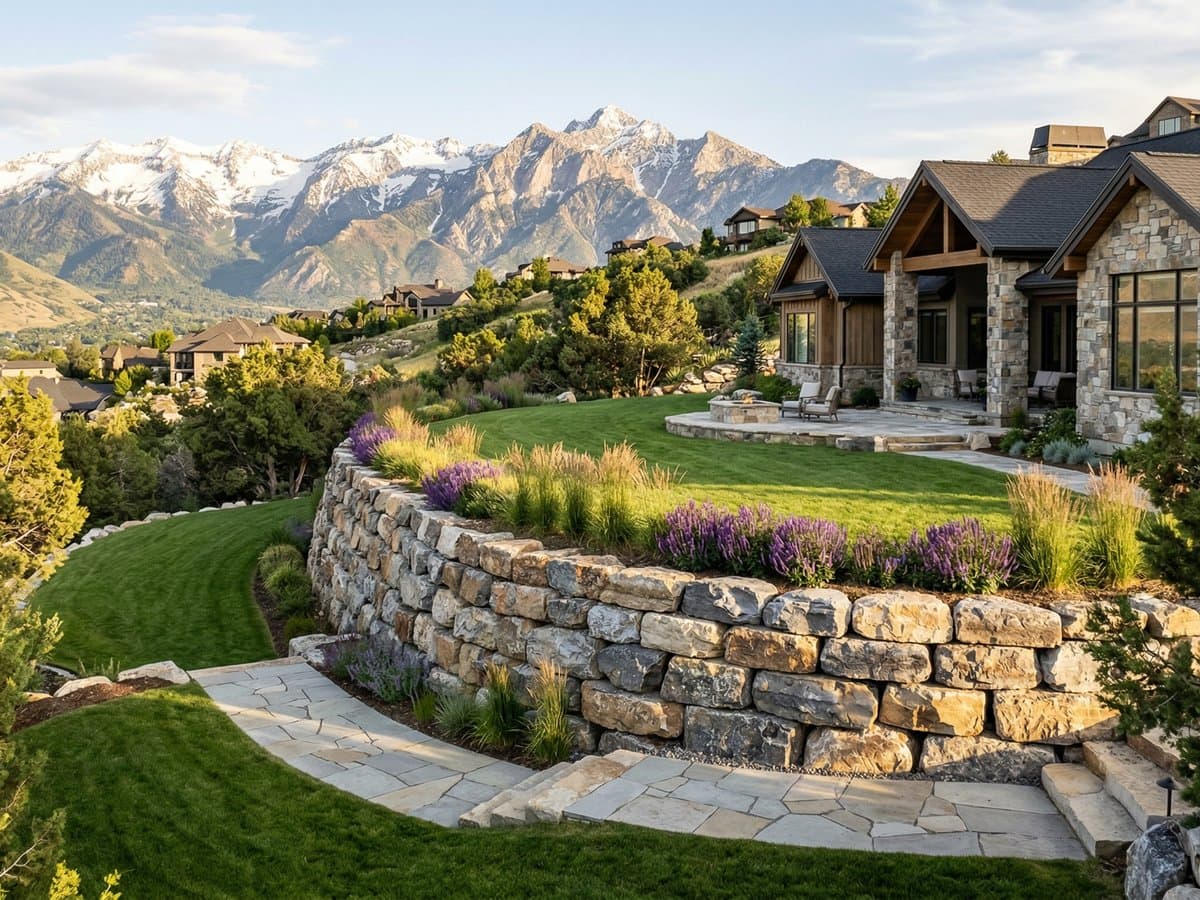
Overview
On the Wasatch Front, retaining walls do real work. Sloping lots are the norm across the foothills — Sandy, Draper, Lehi, Alpine, Cottonwood — and a properly built retaining wall is often the difference between a steep, unusable hillside and a flat lawn, terraced garden, or driveway extension. Walls under 4 feet are usually straightforward; walls over 4 feet typically require engineering and may need a permit, depending on your city.
Material matters. Segmental concrete blocks (Allan Block, Belgard, Versa-Lok) are the fastest and most cost-effective; natural stone looks spectacular but costs 50-100% more; timber is cheapest up front but has a shorter life in our climate. What matters most isn't the face material — it's what's behind it. Proper drainage (gravel backfill, drainage pipe), compacted base, and geo-grid reinforcement on taller walls prevent the failures we see on hundreds of DIY walls across the valley each spring.
Yardd connects you with Wasatch Front wall specialists who know when you need an engineer, how to handle Utah clay backfill, and when to recommend a tiered system versus one tall wall.
Built for the Wasatch Front
- Foothill lots (Sandy, Draper, Lehi, Alpine, Bountiful, Sandy, Cottonwood Heights) mean most yards need some grading
- Utah clay expands with moisture — drainage behind the wall is critical or the wall will bow out
- Freeze-thaw cycles demand proper base prep; shallow bases fail within 1-2 winters
- Walls over 4 feet usually require permits and engineering on the Wasatch Front
Project types
Key decisions
- ·Material: segmental block ($30–$45/ft), natural stone ($55–$75+/ft), timber ($25–$40/ft, shorter life)
- ·Drainage: 12" of 3/4" clean gravel + perforated drain pipe behind every wall
- ·Base: 6-8" compacted aggregate, minimum
- ·Reinforcement: geo-grid layers tied back into the hill for walls over 4 feet
- ·Permitting: walls over 4 feet (or over 2 feet with a surcharge above) need permits in most cities
How it works
- 1
Site evaluation
Installer assesses slope, soil, existing drainage, and determines if engineering/permitting is needed.
- 2
Excavation & base
Trench dug 6-8" below grade, filled and compacted with aggregate for a level foundation.
- 3
Block or stone placement
Each course is leveled, set-back to match product specs, and pinned or interlocked. Natural stone takes artistry.
- 4
Backfill & drainage
Gravel backfill + drain pipe behind the wall, compacted in lifts. This is where walls succeed or fail over time.
- 5
Cap & cleanup
Top caps are set, site is graded away from the wall, and finishing touches applied.
Frequently asked questions
How much does a retaining wall cost in Utah?+
Do I need a permit for a retaining wall?+
Block wall or natural stone?+
Why do retaining walls fail?+
Can I use timber for a retaining wall?+
How long does installation take?+
Ready to start your retaining walls project?
Get free, no-obligation quotes from vetted installers on the Wasatch Front — usually within 24 hours.