
Fire Pits
Your outdoor living room, 9 months a year.
Typical pricing: $2,500–$12,000
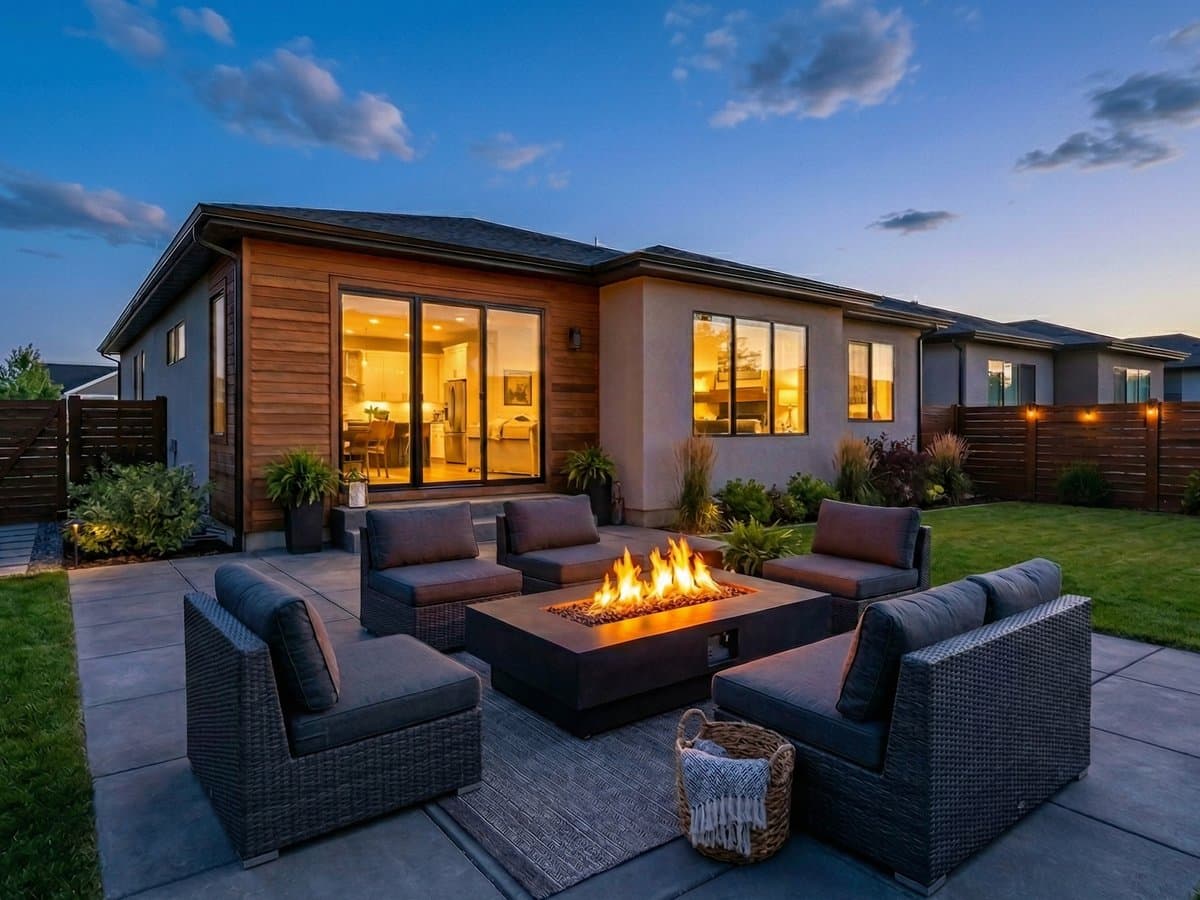
Overview
Utah has some of the best fire-pit weather in the country — cool spring evenings, long summer twilights, and crisp fall nights that practically demand a gathering around flame. A built-in fire feature extends your usable outdoor living from roughly May through October into nearly year-round enjoyment, and it's consistently one of the top-rated additions by homeowners who've done one.
There are three main paths: wood-burning (authentic, most heat, ash to manage, smoke restrictions on air-quality days), natural gas (clean, instant-on, requires a line run from the house), and propane (flexible, tanks hidden in the base). Gas is by far the most popular on the Wasatch Front because of inversion-season air quality alerts — when wood burning is restricted, gas fires are fine. Budget from $2,500 for a simple wood-burning ring to $12,000+ for a full stone gas feature with seat walls.
Yardd connects you with installers who handle permitting, gas line runs, and the stone or masonry work that turns a fire feature into a centerpiece.
Built for the Wasatch Front
- Inversion season (Dec–Feb) triggers "red air" days with wood-burning bans — gas fire pits can still be used
- Long, dry summers and cool desert nights make for ideal fire-pit weather
- Gas line runs are straightforward in most Wasatch Front homes — check if your main line has capacity
- Local codes require clearances from structures (typically 10+ ft) and from property lines
Project types
Key decisions
- ·Fuel: wood-burning (cheapest, most authentic), natural gas (most convenient), propane (flexible)
- ·Location: 10+ ft from any structure; consider prevailing wind direction
- ·Seating: seat walls ($25-35/linear ft) extend budget but transform the space
- ·Gas line: if running from the house, budget $15-25/linear ft for trenching and plumbing
- ·Cover: a weatherproof cover extends lifespan through Utah winters
How it works
- 1
Design & location
Installer walks the yard, identifies the best location for views, wind, and clearances, and sketches options.
- 2
Permitting (if needed)
For gas features, a permit is usually required. Your installer handles the paperwork.
- 3
Excavation & base
Site is excavated, a concrete footing is poured, and base prep is completed.
- 4
Masonry or ring install
Stone or block is laid around a stainless or steel ring insert. For gas, the burner and key valve are plumbed.
- 5
Finish & test
Cap stones set, gas pressure-tested, lava rock or fire glass installed, and you get a safety walkthrough.
Frequently asked questions
How much does a built-in fire pit cost?+
Wood-burning or gas?+
Do I need a permit for a fire pit?+
Can I use my fire pit on "red air" days?+
How far should a fire pit be from my house?+
What's the best base for a fire pit?+
Ready to start your fire pits project?
Get free, no-obligation quotes from vetted installers on the Wasatch Front — usually within 24 hours.