
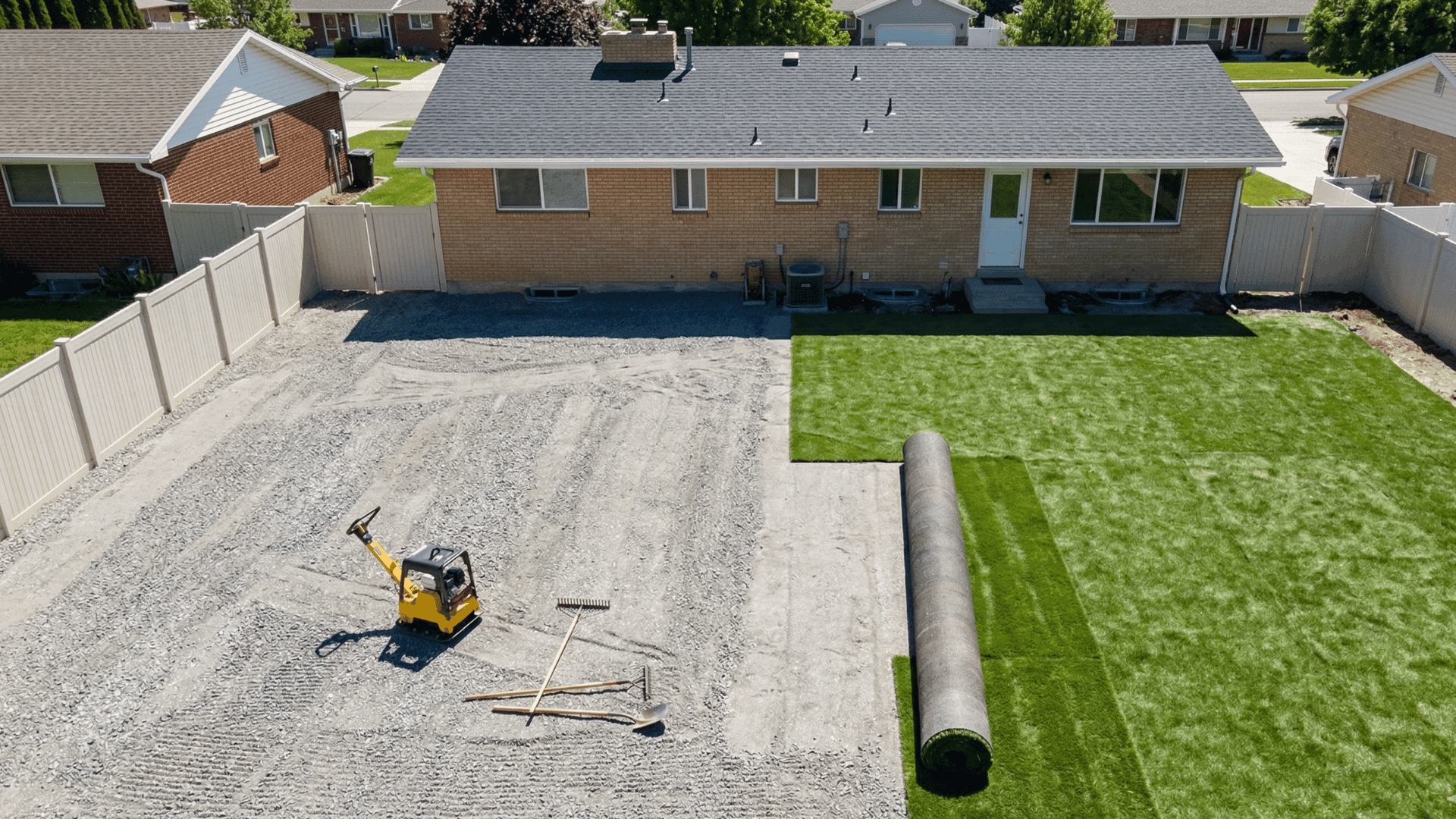
Utah's landscaping market has grown fast — and with it, the number of operators who are here for a season and gone before warranty issues surface. Here's how to separate the professionals from the rest before you hand anyone a deposit.
Verify License and Insurance First
This is non-negotiable. In Utah, landscape contractors installing hardscape or doing grading work require a contractor's license from the Utah Division of Occupational and Professional Licensing (DOPL). Verify at dopl.utah.gov before your first real conversation.
Beyond licensing, ask for a Certificate of Insurance (COI) showing:
- General liability (minimum $1 million per occurrence)
- Workers' compensation if they have employees
Any legitimate contractor sends this without hesitation. If you get pushback or excuses, move on — you're liable for accidents on your property if they're uninsured.
Specialization Matters More Than You Think
A contractor who does everything — turf, concrete, sprinklers, fencing, sod — often does nothing particularly well. If you're installing artificial turf, look for a company that does it regularly. The same goes for pavers, retaining walls, or concrete work.
Ask: What percentage of your projects involve this type of work? A specialist will give you a confident answer and likely have a portfolio full of similar jobs.
How to Evaluate Portfolio and References
Photos on a website are a starting point, not a proof of quality. Ask for:
- Photos of completed projects specifically similar to yours (size, material, complexity)
- References from jobs installed 2+ years ago — this tells you how the work holds up
When you call a reference, ask these three things:
- Did the project finish on time and on budget?
- Were there any issues after installation, and how did the contractor handle them?
- Would you hire them again?
That last question tells you more than anything else.
What a Professional Quote Looks Like
A professional quote is itemized. It shows:
- Materials with specifications (brand, grade, square footage)
- Labor broken out from materials
- Demo/haul-away costs if applicable
- Timeline with start and completion dates
- Payment schedule tied to milestones
A quote that just says "Backyard turf install — $8,500" with no breakdown is not a quote you should accept. You have no way to compare it to others or verify what you're actually getting.
Red Flags to Watch For
Full payment upfront. A standard schedule is 30–50% deposit, with the remainder due on completion. Full upfront payment removes all incentive to finish well.
No written contract. A handshake deal is not a contract. If there's no written agreement specifying materials, timeline, and scope, you have no recourse.
Extremely low bids. If one quote is 40% lower than the others, find out why — it's almost always either inferior materials, an incomplete scope, or someone who will disappear mid-project.
Vague answers about materials. "Premium turf" and "quality rock base" mean nothing without specs. Push for brand names, face weights, and compaction depths.
No local references. If a contractor can't give you references within 20 miles, they either don't work much in your area or the references weren't worth giving.
Green Flags Worth Noting
- Asks about drainage before quoting. This means they understand what makes an installation last.
- Mentions HOA compliance proactively. They've done this before and know the local rules.
- Shows photos of jobs 2–3 years old. Confident in how their work ages.
- Explains what could go wrong. Honest contractors talk about risk; salespeople don't.
- Pulls permits when required. Some hardscape and grading work requires permits in Salt Lake and Utah counties. A contractor who skips this is cutting a corner that could cost you at resale.
What Should Be in Your Contract
Before any work starts, get these in writing:
- Full scope of work with material specifications
- Start and completion dates (with reasonable contingency for weather)
- Payment schedule tied to project milestones
- Change order process — what happens if scope expands
- Warranty terms: what's covered, for how long, and by whom
A contractor who resists a written contract is telling you something important about how disputes will be handled.
Using a Platform vs. Going It Alone
Finding contractors through referrals or search is hit-or-miss. Platforms like Yardd vet contractors for license, insurance, and experience before they can receive leads — which means the baseline quality is higher before you've made a single phone call.
You still need to evaluate each quote carefully. But you're starting from a more reliable pool.