Artificial turf is a long-term investment, and most homeowners want a straight answer: how long before I have to do this again? The honest answer depends on what you buy, how it's installed, and how Utah's specific climate affects it. Here's what you need to know.
The Short Answer: 15–20 Years for Quality Turf
Premium artificial turf installed by a professional on a proper base should last 15–20 years in a residential application. Some manufacturers back their products with 15-year warranties. Economy-grade turf or poor installation can cut that in half — 8–10 years before the fibers flatten, seams split, or the base shifts enough to cause drainage problems.
The turf itself doesn't "wear out" in the way carpet does. What actually fails over time is a combination of UV degradation, infill breakdown, blade fiber fatigue, and base movement.
How Utah's Climate Affects Turf Lifespan
Elevation and UV Exposure
Salt Lake City sits at 4,226 feet. Provo, South Jordan, and Draper are similar. At elevation, UV radiation is measurably more intense than at sea level — roughly 4–6% more per 1,000 feet. That matters for turf because UV is the primary cause of color fading and fiber brittleness over time.
Low-quality turf with inadequate UV stabilizers can visibly fade within 3–5 years in Utah, turning from a natural olive-green to a washed-out lime. Quality turf uses UV-stabilized polyethylene fibers with a measured UV resistance rating. Always ask for the spec sheet and look for UV stabilization data, not just the brand name.
Freeze-Thaw Cycles
Utah winters produce significant freeze-thaw cycling — ground that freezes and expands, then thaws and contracts, repeatedly through the season. Properly compacted base rock absorbs this movement without transferring it to the surface. Improperly compacted base moves, causing the turf surface to ripple, seams to open, and edges to lift.
This is why base preparation is the most important part of the install. A contractor who rushes compaction or installs too little aggregate depth is setting your turf up to fail in year three or four, not year fifteen.
Heat
Utah summers are hot and dry. Artificial turf gets significantly hotter than natural grass in direct sun — surface temperatures on a 95°F day can reach 150°F or higher on dark-colored turf. This isn't a longevity issue for the turf itself (quality fibers tolerate these temperatures) but it affects comfort and accelerates infill breakdown in economy systems.
Organic infills (cork, coconut fiber) break down faster in extreme heat than silica sand. If your yard gets intense afternoon sun, ask your installer about infill longevity in those conditions.
What Actually Wears Out First
Infill — The material packed between the blades. Silica sand lasts essentially indefinitely. Organic infills may need partial top-off every 5–7 years. Crumb rubber degrades into small particles over time. Infill can be refreshed without replacing the turf.
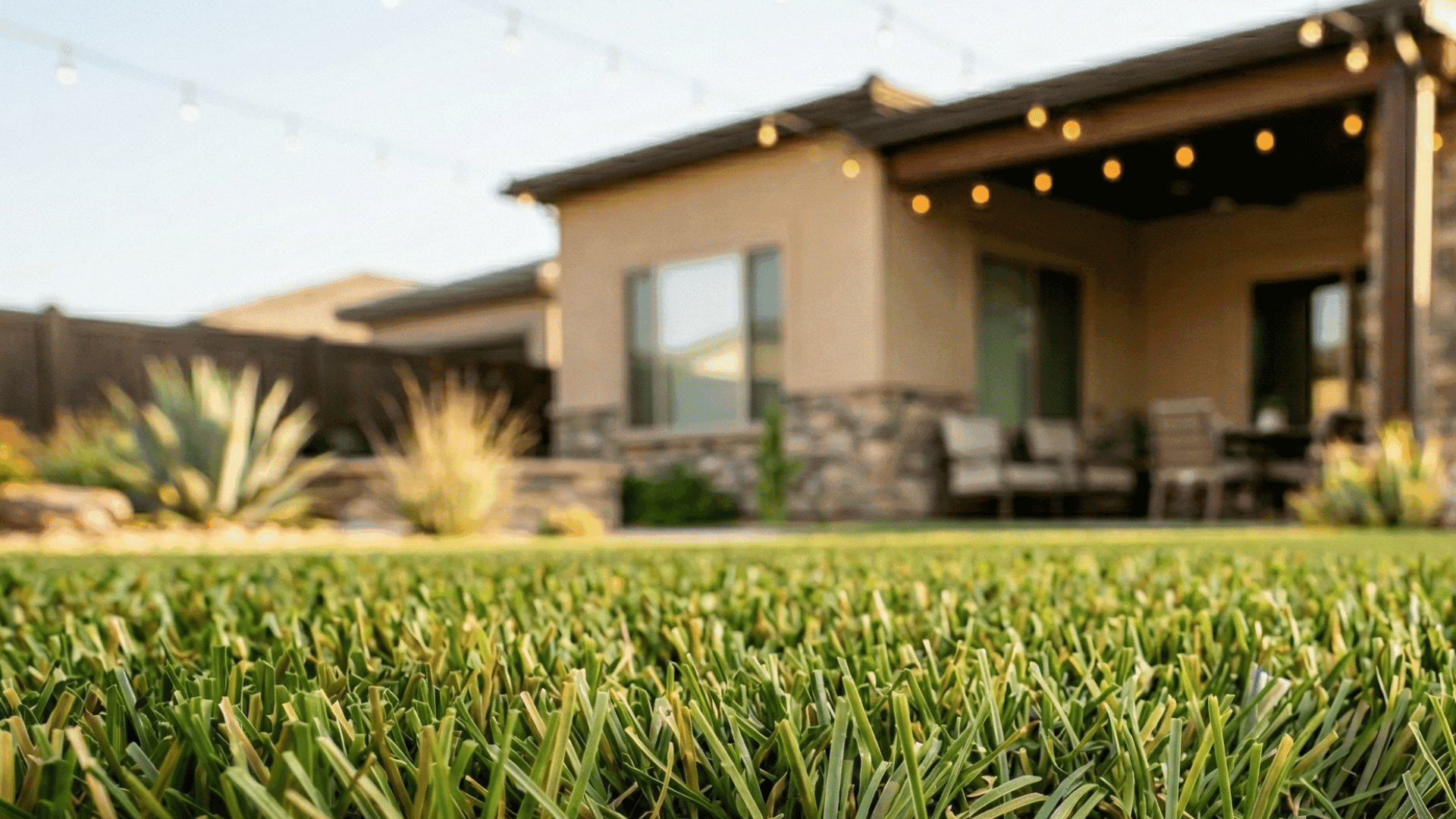
Blade fibers — In high-traffic areas (a dog run, play area, or sports surface), blades will flatten and lose their upright appearance over time. Quality turf with thick, C-shaped or W-shaped blade cross-sections holds up better than flat-blade economy products. Brushing the turf periodically helps, but heavily trafficked zones will show wear first.
Seams — The weakest point of any turf installation. Quality seaming technique using the right adhesive and proper overlap is critical. Seams that open up don't require full replacement — they can be reglued — but a bad seam in year two is a sign of poor installation, not product failure.
Edging — Bender board or steel edging that holds the turf perimeter. Cheap bender board can crack or bow after a few freeze-thaw cycles. Steel edging or high-grade composite edging lasts the life of the turf.
Signs Your Turf is Reaching End of Life
- Significant, uniform blade flattening that doesn't respond to brushing
- UV fading across the entire surface (not just sun-side edges)
- Multiple seams separating across the yard
- Drainage noticeably slower than when installed (infill compaction or base settling)
- Surface rippling or uneven spots from base movement
A single failing seam or a faded edge strip isn't end-of-life — it's a repair. End-of-life is when the system as a whole has degraded to the point where repairs are no longer cost-effective.
How to Maximize Lifespan
Brush the turf once or twice a year with a stiff-bristled broom or power broom (available to rent). This lifts matted blades and redistributes infill. High-traffic areas benefit from more frequent brushing.
Rinse regularly, especially with pets. Organic waste breaks down infill and can cause odor. A garden hose rinse weekly, and a diluted enzyme cleaner monthly for pet areas, keeps the infill performing well.
Keep it clear of debris. Leaves, dirt, and organic material that sit on the surface compress the blades and eventually work into the infill. A leaf blower handles most of this in minutes.
Don't park on it. Concentrated point loads from vehicle tires compress the base unevenly and create permanent divots.
Check edges and seams annually. Catching a loose edge or lifting seam early means a simple repair rather than a bigger issue.
Getting a Turf System Built to Last
Not all turf is the same, and not all installers specify their products clearly. When getting quotes, ask each contractor for the brand name, face weight, blade type, UV stabilization rating, and infill specification — in writing. A contractor who won't put the product specs on paper is a contractor worth avoiding.
On Yardd, every quote includes itemized line items so you can compare what's actually being installed — not just the bottom-line number.