Planning a turf project in Salt Lake or Utah County? The number-one question we hear is: how much is this actually going to cost? Here's the honest, line-by-line breakdown — no fluff, no bait-and-switch ranges.
Average Cost Range in Utah
Most homeowners on the Wasatch Front pay $10–$20 per square foot installed, all-in. A typical backyard (600–1,000 sq ft) runs $7,000–$18,000 depending on the variables below.
That range is wide because turf is not a single product — it's a system. The materials, the base, and the labor all vary significantly based on your specific site and the quality level you choose.
What's Included in a Full Installation
A professional turf install has several distinct cost components:
Demo and haul-away — Removing existing sod, gravel, or concrete. Expect $1–$2/sq ft depending on what's there and how accessible the yard is.
Base preparation — Typically 3–4 inches of crushed aggregate (Class II base rock) compacted to grade. This is the most important step: a bad base means drainage problems and a wavy surface. Budget $2–$4/sq ft.
Turf material — The biggest variable. Entry-level turf (28 oz face weight, 1.5" pile) runs $2–$3/sq ft. Premium turf (60+ oz face weight, multi-tonal blades, pet-friendly infill system) can hit $5–$8/sq ft at material cost alone.
Infill — Silica sand or a crumb rubber/organic blend is spread after installation to support the blades and add weight. $0.50–$1.50/sq ft depending on type.
Labor — Professional installation runs $3–$5/sq ft. Don't cut here — improper seam placement and edging are the most common causes of early failure.
What Moves the Price
Turf Grade
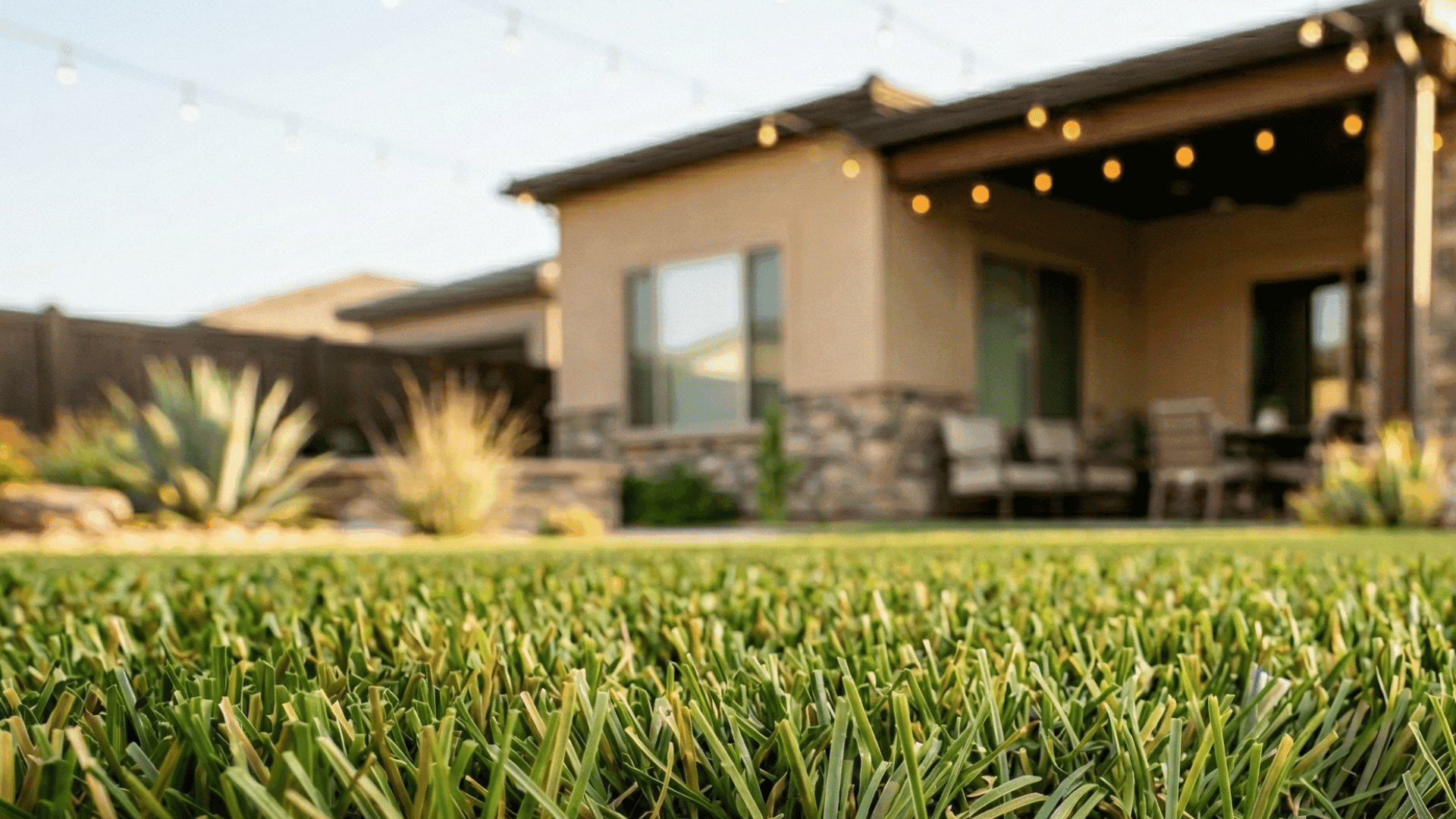
Pile height, face weight (oz per sq yd), blade shape, and color variation all affect cost and realism. For most residential applications, a 40–50 oz face weight in a natural green/olive blend looks excellent and holds up well in Utah's UV conditions.
Infill Type
Standard silica sand infill is the most affordable. Organic infills (cork, coconut husk) add $1–$2/sq ft but are cooler underfoot and preferred for pet yards. Crumb rubber is being phased out by most reputable installers due to heat retention and composition concerns.
Site Conditions
Slopes, narrow side yards, or areas requiring custom drainage cuts add labor time. Expect 15–25% more on complicated sites.
Square Footage
Larger projects benefit from economies of scale — material costs per sq ft drop above 800 sq ft, and mobilization costs are spread over more area. A 1,500 sq ft yard is often more cost-efficient per sq ft than a 400 sq ft side yard.
Sample Project Estimates
Small backyard — 400 sq ft
- Demo/haul: $600
- Base: $1,000
- Turf (mid-grade): $1,400
- Infill + install: $1,600
- Total: ~$4,600
Medium backyard — 800 sq ft
- Demo/haul: $1,000
- Base: $2,400
- Turf (mid-grade): $2,800
- Infill + install: $3,000
- Total: ~$9,200
Large yard — 1,500 sq ft
- Demo/haul: $2,000
- Base: $4,200
- Turf (premium): $7,500
- Infill + install: $5,000
- Total: ~$18,700
Wasatch Front–Specific Considerations
Utah's freeze-thaw cycles are harder on improperly installed bases than many other markets. A reputable installer will specify the compaction density and drainage plan upfront — if they don't mention this, ask.
Many HOAs in South Jordan, Daybreak, Draper, and Herriman have specific rules about turf color, pile height, and setback from the street. Verify before purchasing materials.
UV exposure at elevation (Salt Lake sits at 4,226 ft) accelerates fading in lower-quality turf. Look for product specs showing UV stabilization ratings and ask for local references showing color retention after 3+ years.
Questions to Ask Every Installer
Before signing anything, get clear answers to these:
- What's the face weight and brand of turf you're quoting?
- What depth and compaction spec for the base rock?
- What infill are you using and why?
- What's the drainage plan — will you install a drain or rely on the base?
- What does the warranty cover, and who backs it (manufacturer vs. installer)?
- Can you share 2–3 references from projects installed 2+ years ago?
A quality installer answers these without hesitation. Vague answers about "the good stuff" without specifics are a red flag.
Getting an Accurate Quote
Phone estimates are nearly useless for turf. The only way to get an accurate number is an in-person measurement with a contractor who can see your base, access constraints, and existing conditions.
On Yardd, you describe your project once and receive itemized quotes from vetted local installers — with line-item breakdowns showing exactly what you're paying for. No phone tag, no guesswork.