Utah is the second-driest state in the country, and the Wasatch Front's rapid growth has put water use under increasing scrutiny. Artificial turf used to be easy to spot — stiff, bright green, borderline fake-looking. That's changed significantly. Here's an honest look at both options.
Upfront Cost
This is where natural grass wins, and it's not close. Sod installation runs $1–$3 per square foot installed. Artificial turf runs $10–$20 per square foot installed on the Wasatch Front.
For a 1,000 sq ft backyard:
- Natural sod: $1,500–$3,500
- Artificial turf: $12,000–$20,000
The upfront gap is significant. The question is whether the long-term math closes it.
Long-Term Cost Over 10 Years
Natural grass — 10-year cost estimate (1,000 sq ft):
- Water: ~15,000 gallons/summer × 10 years × $0.004/gallon = $600
- Mowing (bi-weekly, April–Oct): $2,800–$4,800 if hiring out
- Fertilizer, weed control, aeration, overseeding: $1,500–$2,500
- Sprinkler repair, seasonal blowout: $800–$1,500
- 10-year operating total: ~$5,700–$9,400
Artificial turf — 10-year cost estimate (1,000 sq ft):
- Water: near zero (occasional rinse for pets or heat)
- Maintenance: brushing, infill top-up every 3–5 years: $500–$1,200
- No mowing, no fertilizer, no aeration
- 10-year operating total: ~$500–$1,200
Break-even point: With professional lawn care, turf typically breaks even around year 7–9. With DIY lawn care, it may take longer. With heavy water use and lawn service, the math shifts faster.
Water Usage
The average Utah homeowner uses 30–60% of their household water on outdoor irrigation — much of it on lawns. At current Salt Lake City rates and with ongoing conservation pricing, a 1,000 sq ft lawn uses roughly 12,000–18,000 gallons per summer.
Water rates are rising across the Wasatch Front and will continue to. Some municipalities (and many HOAs) have implemented tiered pricing that penalizes heavy use. Artificial turf eliminates this exposure entirely.
Appearance: The Honest Truth
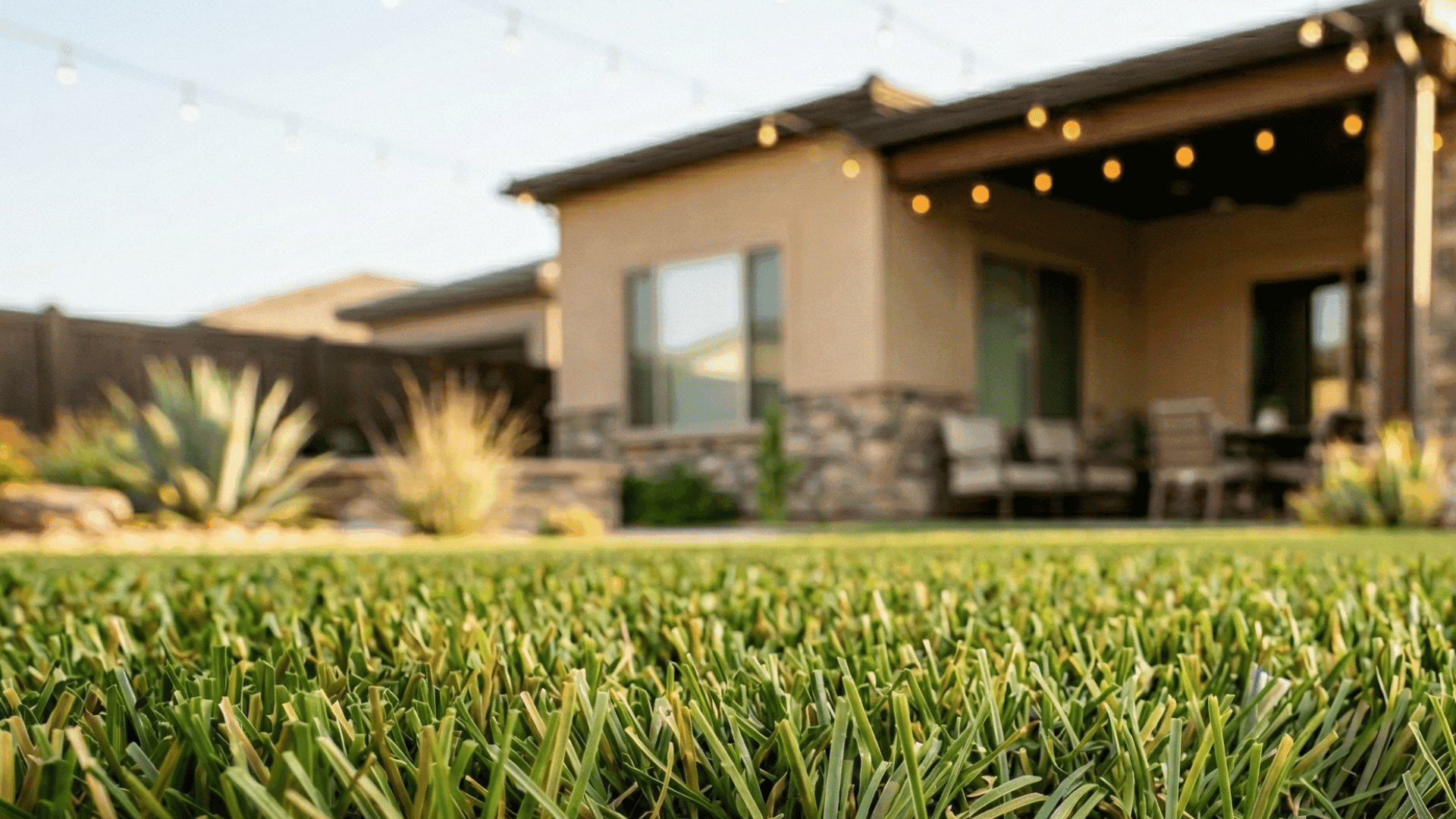
Modern turf — when properly specified and installed — looks very good. The difference between entry-level and premium product is dramatic: multi-tone blades, natural thatch layers, and appropriate pile heights (1.5"–2" for most residential use) are nearly indistinguishable in photos and passable at walking distance.
What turf doesn't do well:
- Extreme heat. In full July sun, turf surface temperatures can reach 140–165°F — 50–70° hotter than natural grass. Infill type and shade affect this significantly.
- Seasonal variation. Natural grass browns in winter, which some homeowners prefer for authenticity. Turf stays green year-round.
- Aging. After 8–12 years, turf blades flatten and lose their structure. Quality product and periodic brushing extend this, but eventual replacement is a fact.
At elevation, Utah's UV intensity accelerates fading. Specify turf with UV stabilization ratings — your installer should be able to show local references from 3+ year installations.
Pets and Children
Turf is genuinely excellent for dogs — no mud, no digging, durable surface. Key considerations:
- Drainage. Pet waste drainage needs to be addressed in the base design. Quality installs use a perforated base or drainage board.
- Infill. Antimicrobial infill options (zeolite, organic) control odor better than plain silica sand.
- Temperature. On hot days, water the turf before pets use it — this drops surface temperature significantly within minutes.
For children, the surface is soft and consistent — better than compacted dirt or patchy grass for fall protection. Most modern turf is free of heavy metals and passes standard safety certifications.
Environmental Trade-offs
The honest version of this conversation:
In favor of turf: Water conservation is substantial and real. In the Western U.S. context — ongoing drought, rising water costs, aquifer depletion — eliminating lawn irrigation is a meaningful environmental choice.
Against turf: Artificial turf is a plastic product. Most is not recyclable at end of life and ends up in landfill. The materials involved (polyethylene, polypropylene) are petroleum-derived. This is a real trade-off and shouldn't be minimized.
The calculus depends on your values and priorities. Many homeowners weigh the 12,000+ gallons of annual water savings against the material footprint and conclude turf is the better environmental choice for Utah specifically.
HOA and Local Regulations
Good news for most Wasatch Front homeowners: most HOAs in the region now permit artificial turf, often with requirements around:
- Natural-looking color palette (not bright green)
- Pile height limits (typically ≤2")
- Setbacks from curb or street
- Approval process before installation
Check your CC&Rs before purchasing anything. Several cities and counties have also begun incentive programs for turf installation as a water conservation measure — worth checking with your municipality.
Who Artificial Turf Is a Great Fit For
- Homeowners with dogs who destroy natural grass
- Slopes or shaded areas where grass struggles
- Water-restricted communities or high-tier water users
- Allergy sufferers (no pollen)
- Anyone who doesn't enjoy lawn maintenance
Who Should Probably Stick With Natural Grass
- Budget under $8,000 for a typical backyard
- Areas with heavy shade and minimal heat exposure (natural grass actually performs well here)
- Athletic use: tackle football, soccer — natural grass performs better for cleats and heavy lateral movement
- Those who specifically value the seasonal, organic nature of a living lawn
Neither choice is universally right. The best decision comes from understanding your usage, your budget horizon, and your priorities. If you're leaning toward turf, the next step is an in-person quote from a contractor who can assess your specific site conditions.